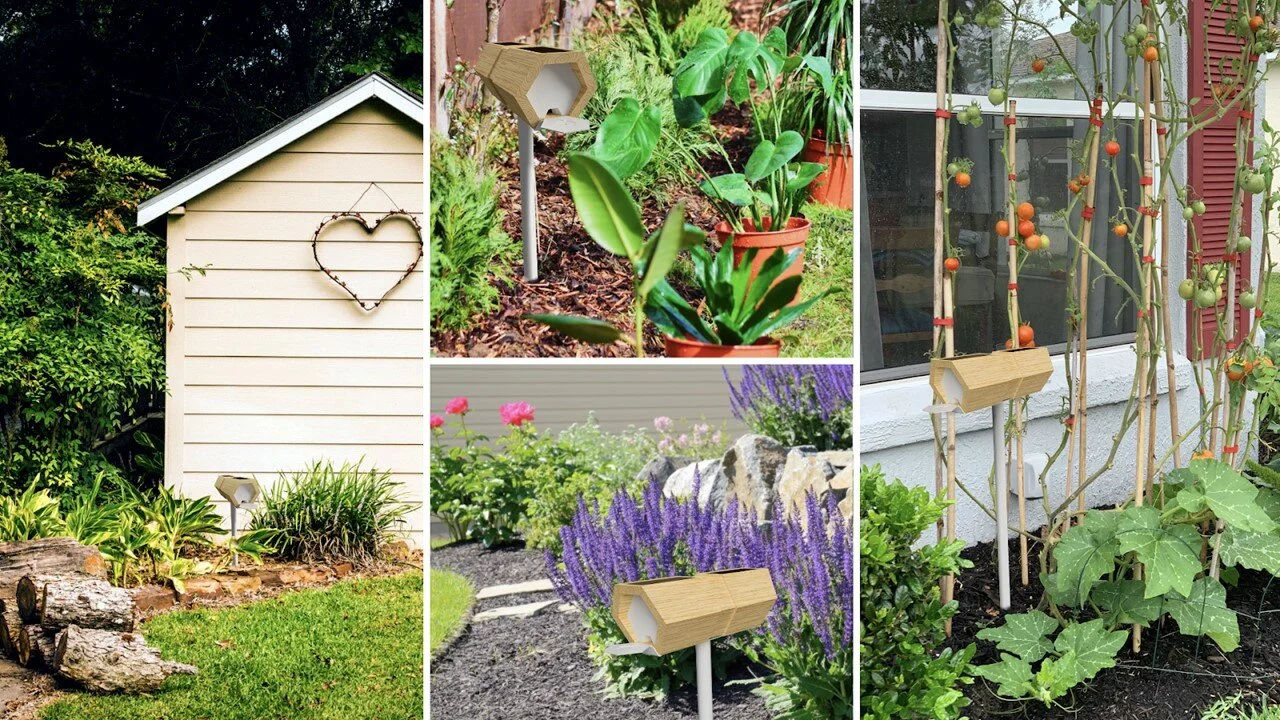
Everbee
User Research and Discovery
A small company was in the early stages of developing a product with a big mission. Their radical new device intended to combat one of the world’s greatest ecological issues: the extinction of global honeybee populations. I joined the team to offer insights on customer appetite and guide the design towards the expectations of end-users.
Due to confidentiality, I am not permitted to disclose the nature of the device and any findings related to it. Some parts have been left deliberately vague. The following is a cursory overview only intended to showcase my research process.
Team
Drew Hopkins (Me) - User Researcher
Mitch Muller - Market Researcher
Carissa Sinclair - Product Designer
Jenna Regan - Project Manager
Joe Farrell - CEO
Brant DeBow - CTO
Tools
SurveyMonkey, Trint, Zoom, Photoshop, XD
Tactics
Screener/surveys, switch interviews, personas, A/B tests, preference tests, focus groups
Recruitment
The company wanted to get an idea of how marketable the device would be and who would be interested in it. I devised a research strategy to target a diverse group of potential users for a round of interviews.
Research goals:

How strong is the need?
What will people pay for and how much will they pay?
Who are the users and how do we reach them?
How would the product fit into customers’ lives?
What defines our target user group(s)?
What are indirect competitors that we might imitate?
Screen participants on a spectrum of the following criteria:
Knowledge of honey bee extinction
Comfort with bees
Environmental advocacy
Outdoor areas within residence
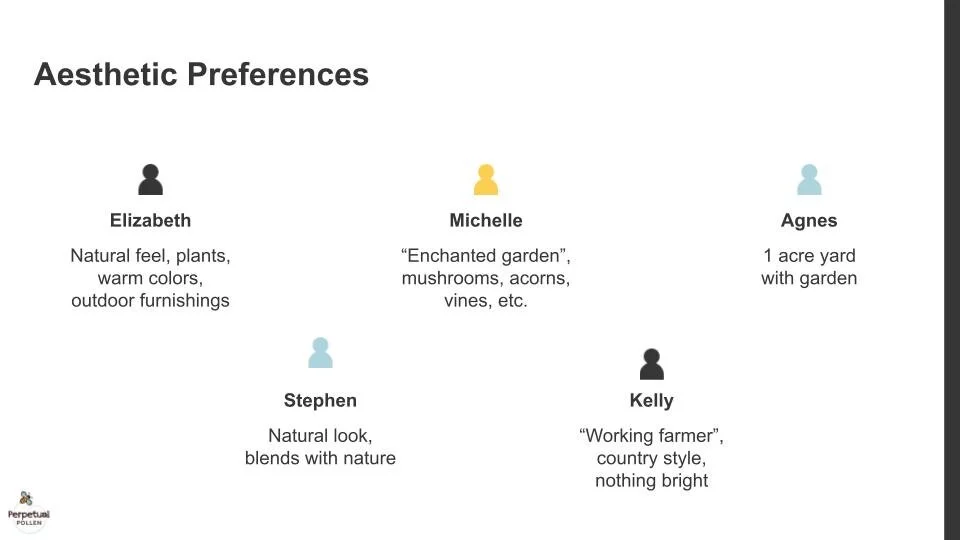
Particularity with outdoor areas (ornamentation, look/vibe, etc.)
Switch Interviews
We recruited 6 participants using UserInterviews.com and recorded our interviews in Trint.
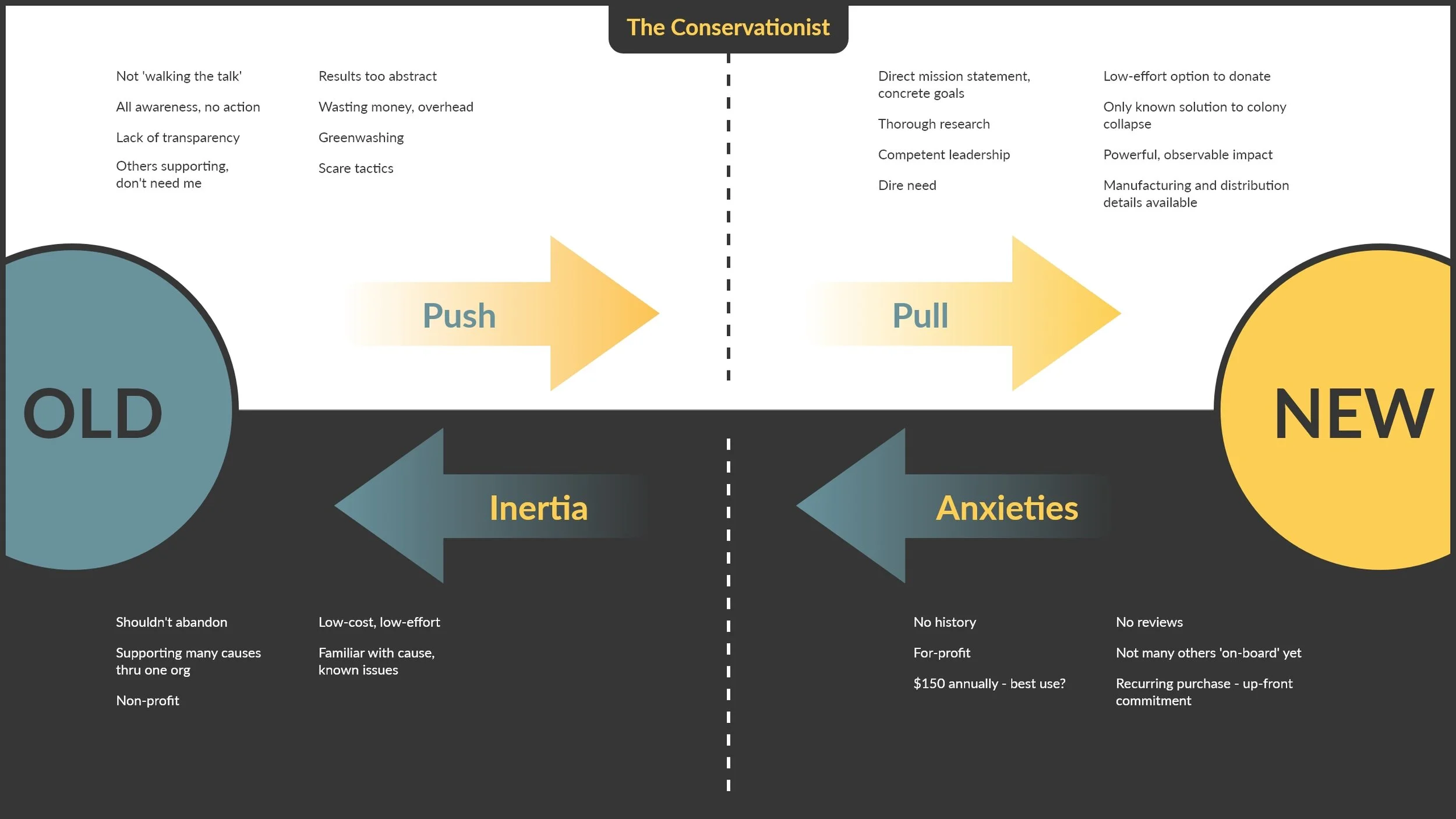
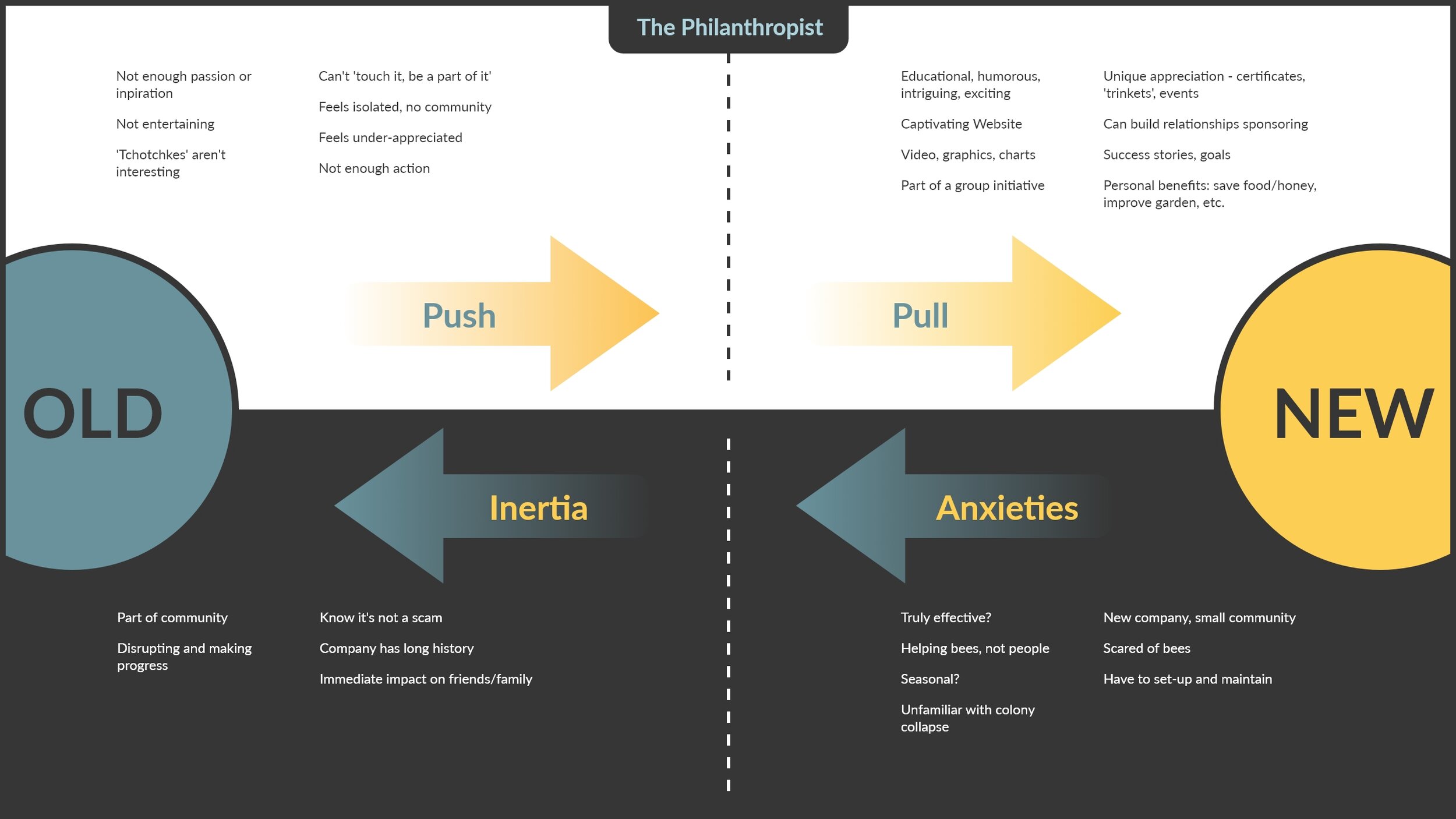
Since our research goals aimed to explore market niche and consumer appetite, we conducted Switch Interviews. Growing a consumer-base from scratch would require most people to “switch” from one product/service to ours (nothing in the market happens in a vaccum). Switch interviews dig into the psychological motivations that drive competitor-product purchases and thereby uncover how such a switch might happen. The domain of Everbee was environmental activism so we believed early-adopters might be those coming from an environmental/humanitarian subscription service (nonprofits, Salvation Army, etc.). We asked participants to explore the attractions and repulsions of their current subscription and then compare those with the attractions and repulsions of our potential product.
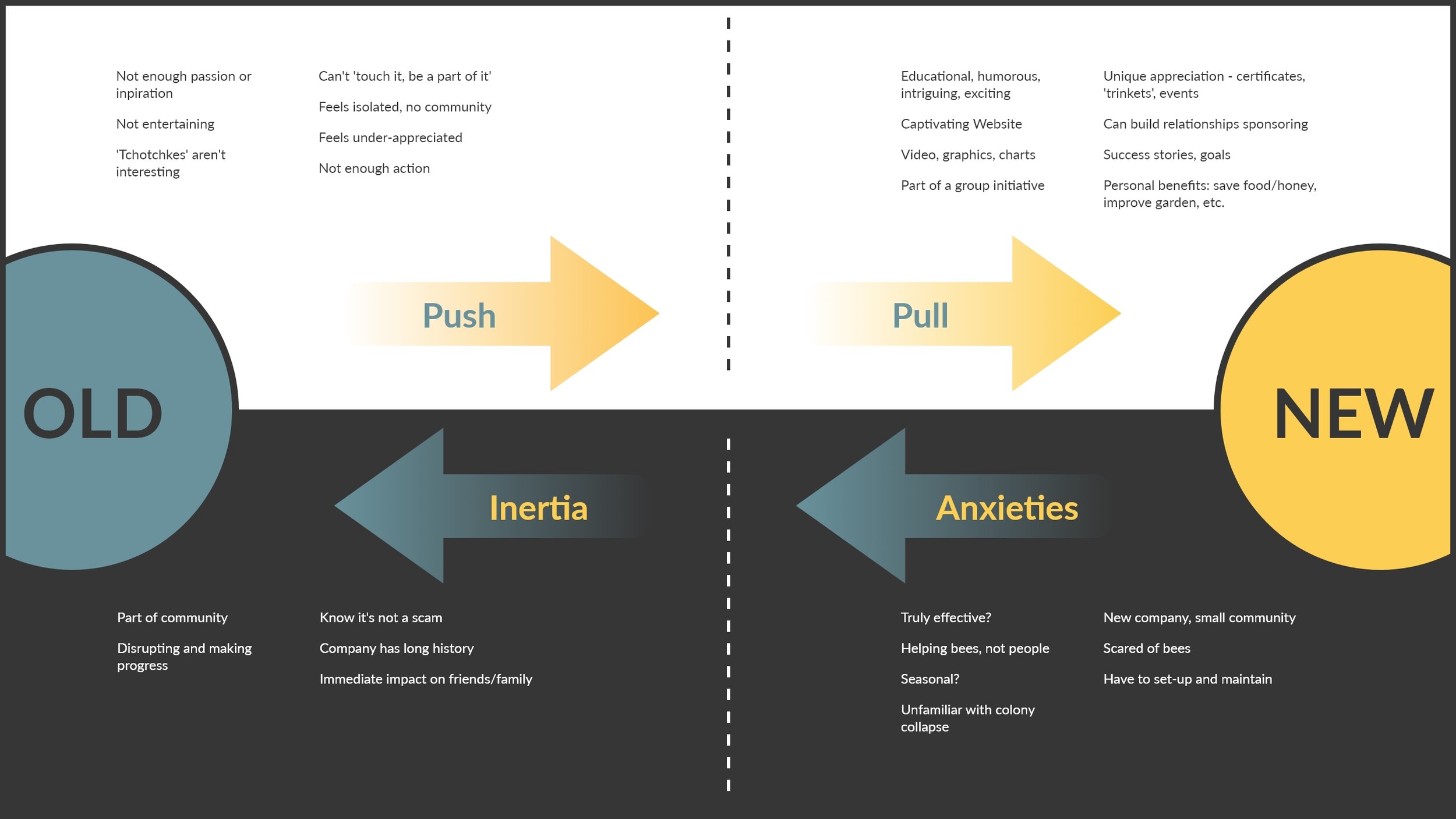
Switch Interviews compare the Pull and Anxiety of a new product/service in contrast to the Push and Inertia of an existing one. I created this visual to help systematize our key insights.
Personas
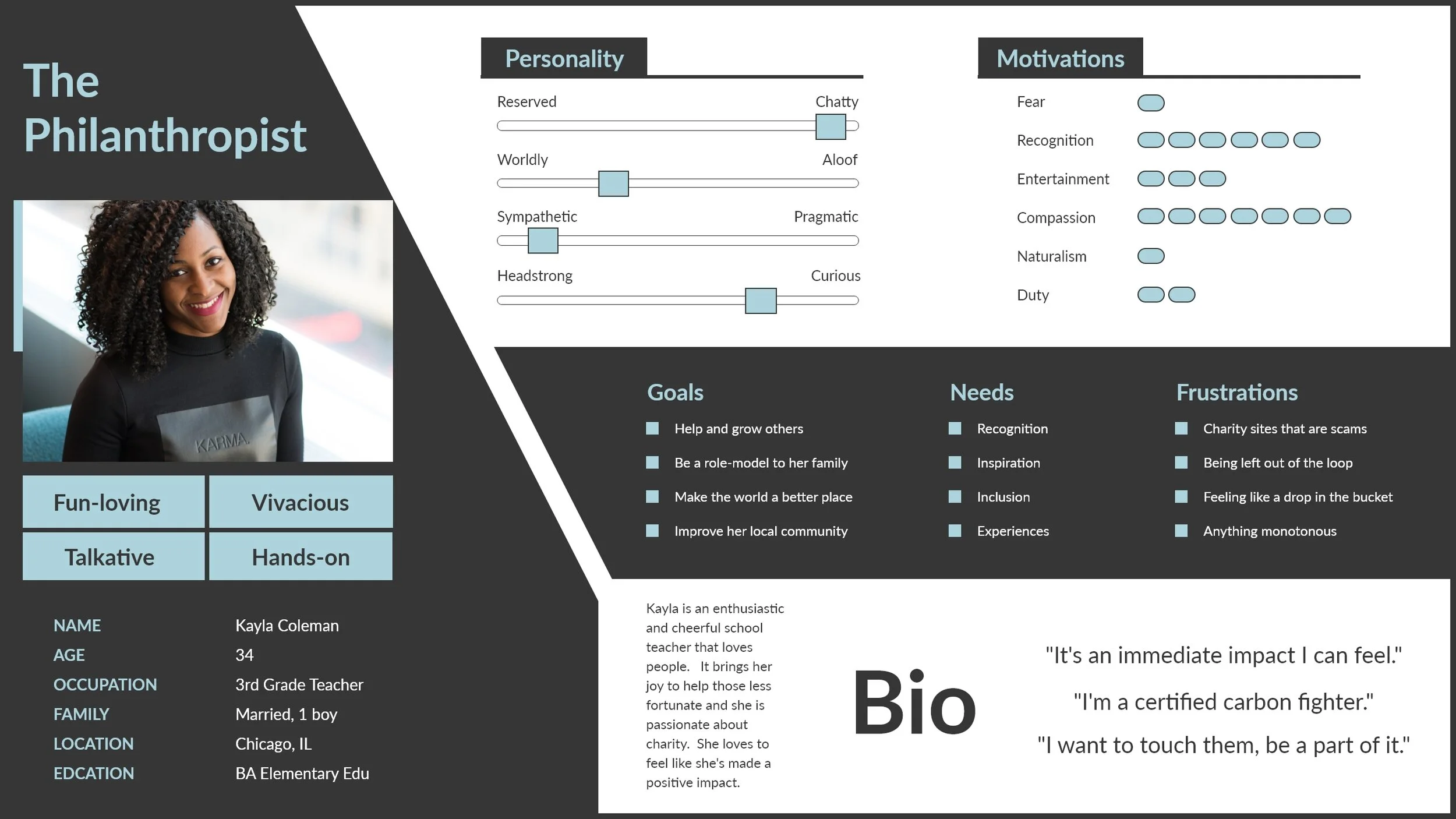
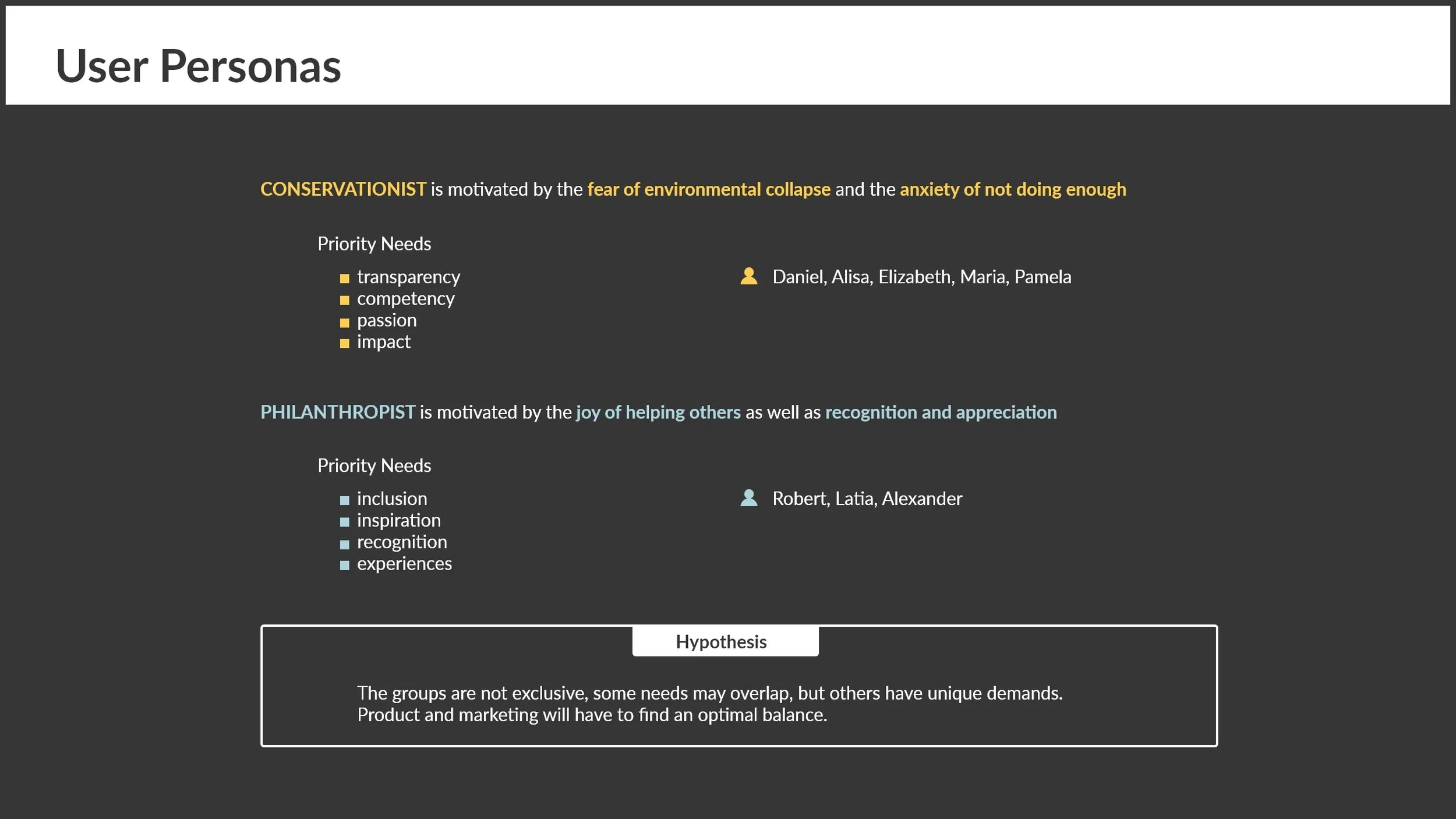
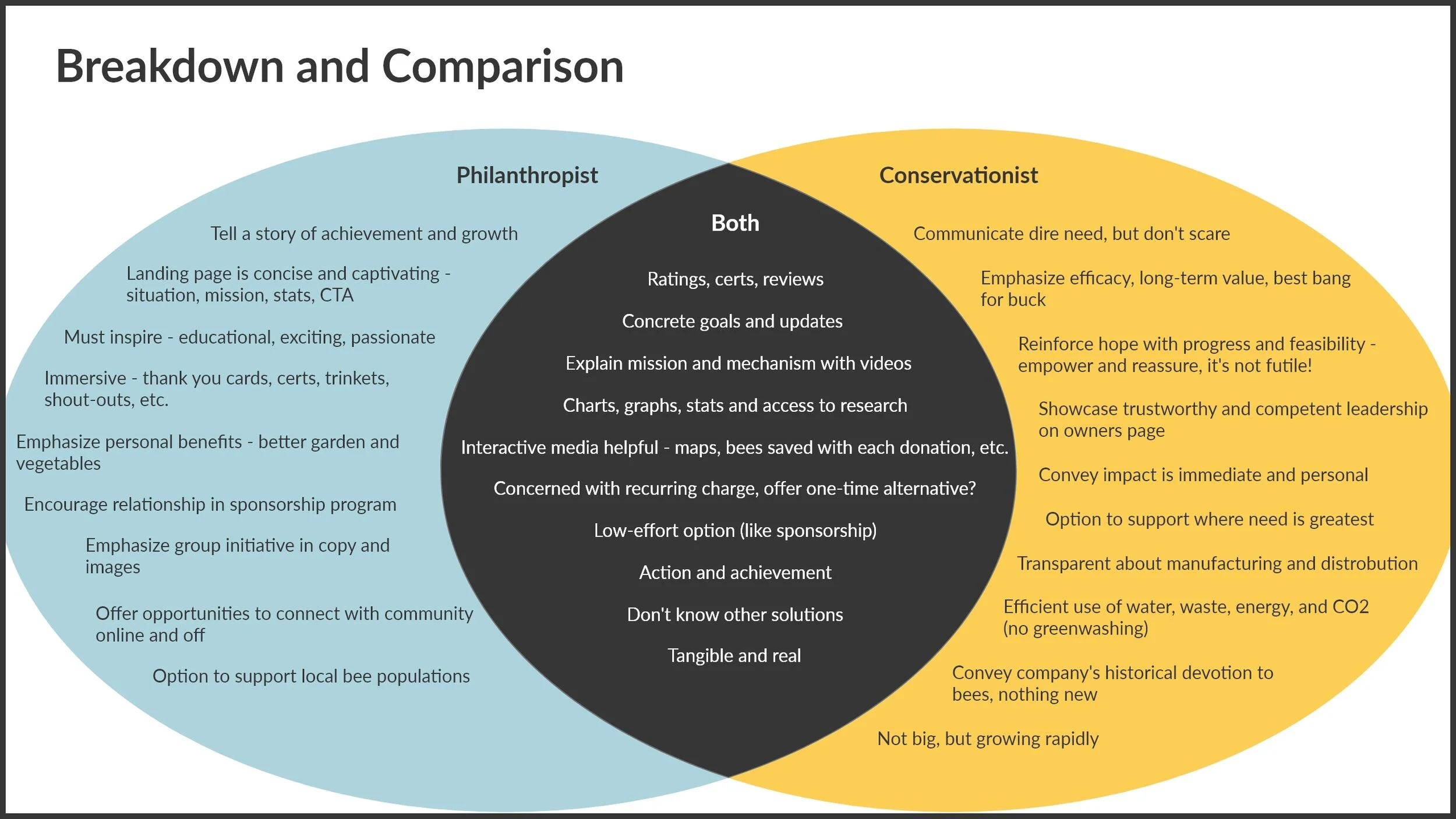
In categorizing our notes, I noticed a pattern emerging between the motivations and goals of our participants. In supporting environmental/humanitarian groups, participants seemed to fall into one of two groups: those primarily driven by the fear of environmental collapse and those driven by the joy of helping others. I classified these as Philanthropists and Conservationists and fleshed out their psychological needs in Personas. Then I further refined our insights in terms of these classifications.
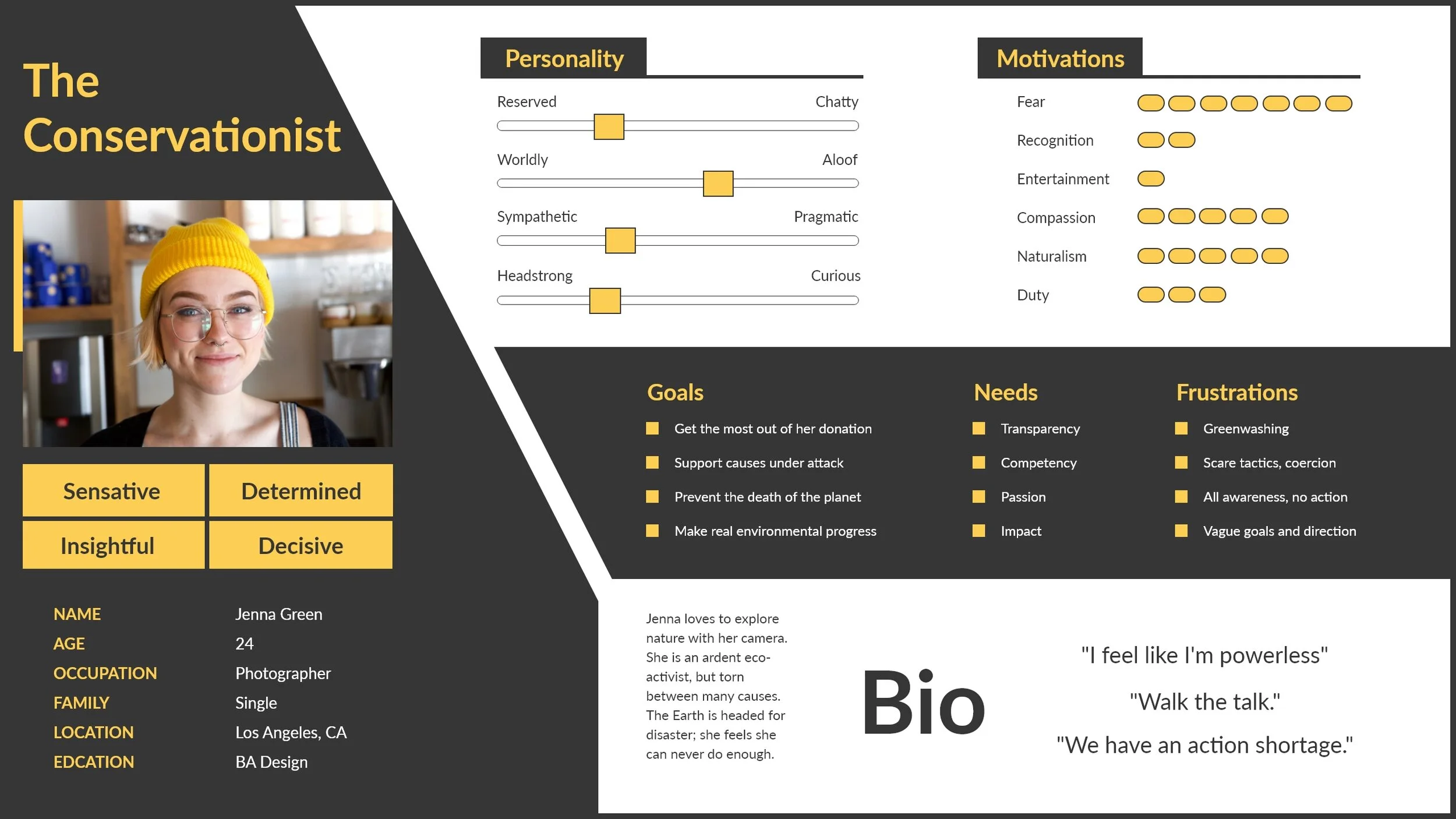
Findings and Considerations
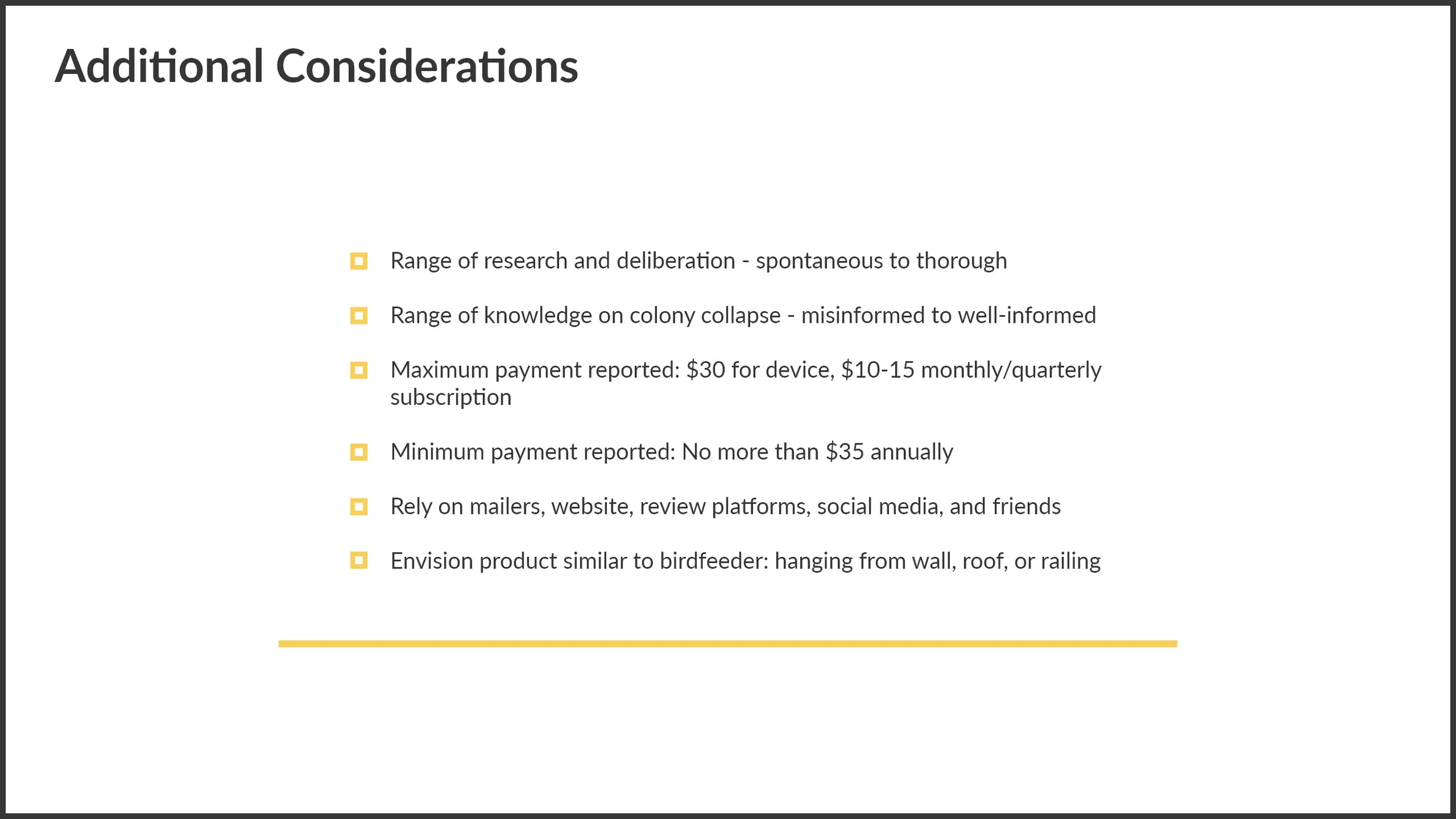
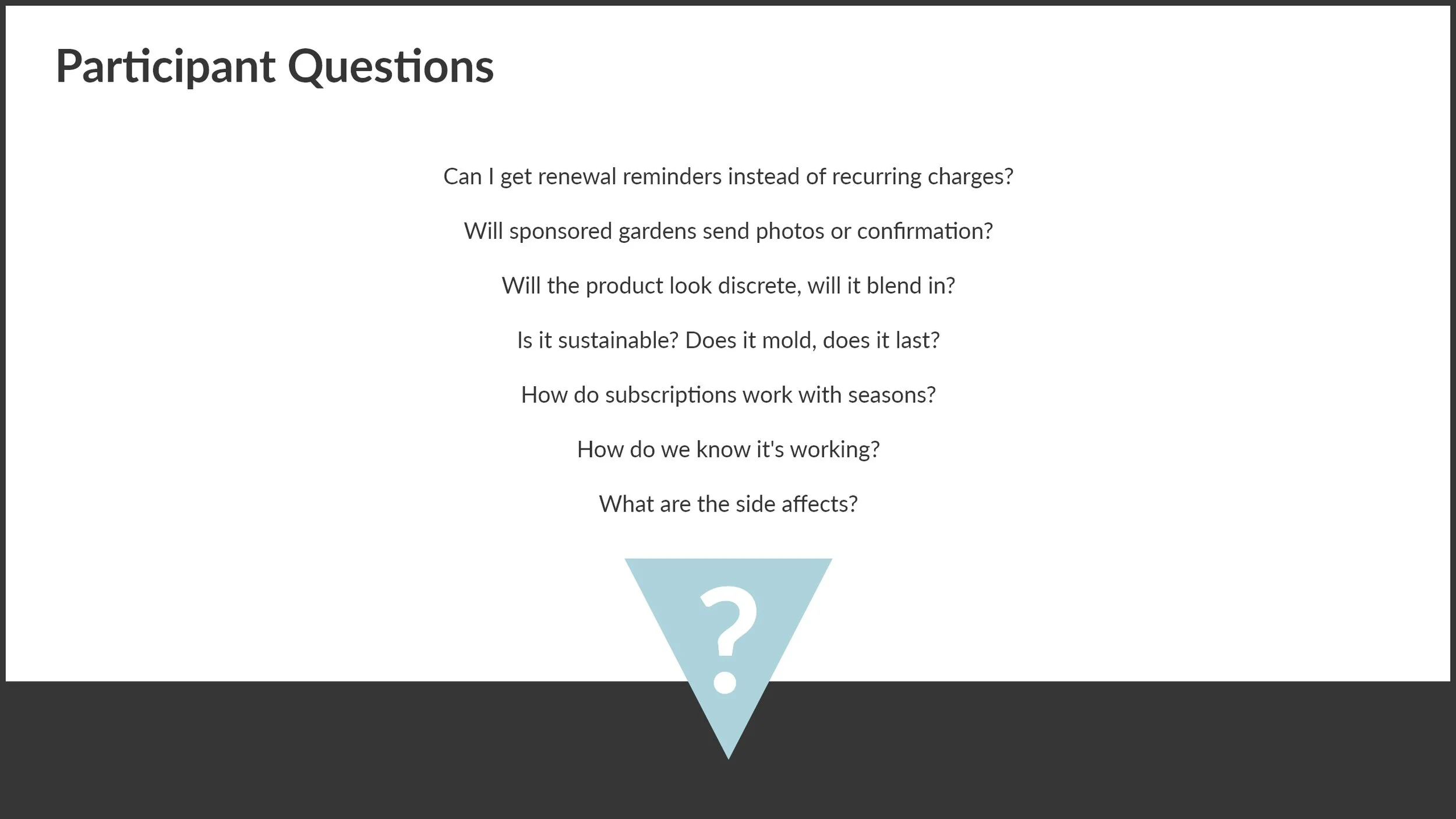
I compared and contrasted the needs of the two personas in regards to our end-product. I then provided considerations and research opportunities for the future of the product and marketing. The insights gleaned here would steer the architecture and design of the product and website later down the road.
Preference Testing
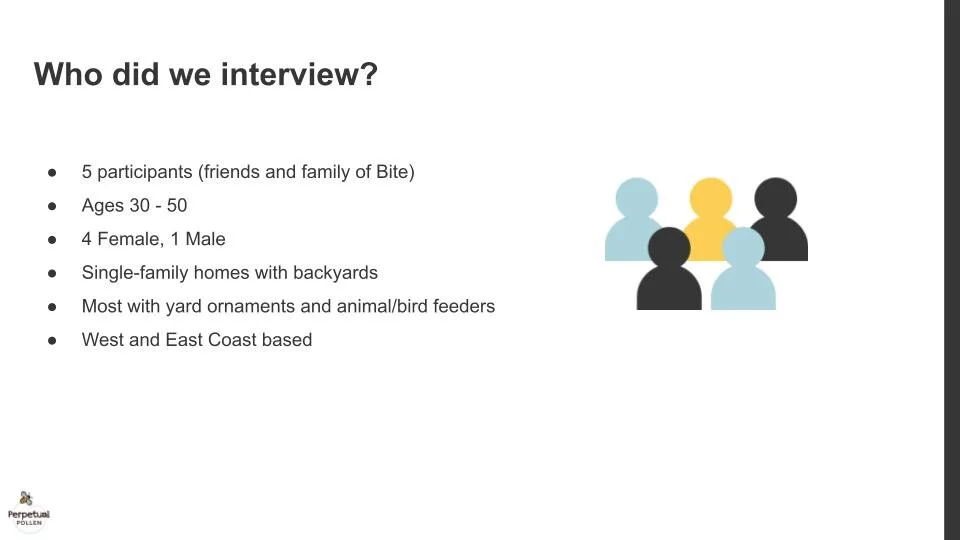
Our product designer went to work on creating 3D models of our potential product. However, the team soon became divided on several aesthetic options. Questions began to surface over a few structural and functional options as well. To gain an unbiased perspective, we decided to conduct a second round of interviews with emphasis on visual preference. Budget being tight, recruitment was limited to friends and family of the company (but some testing is always better than none!)
Research goals:
Preference and preference strength on:
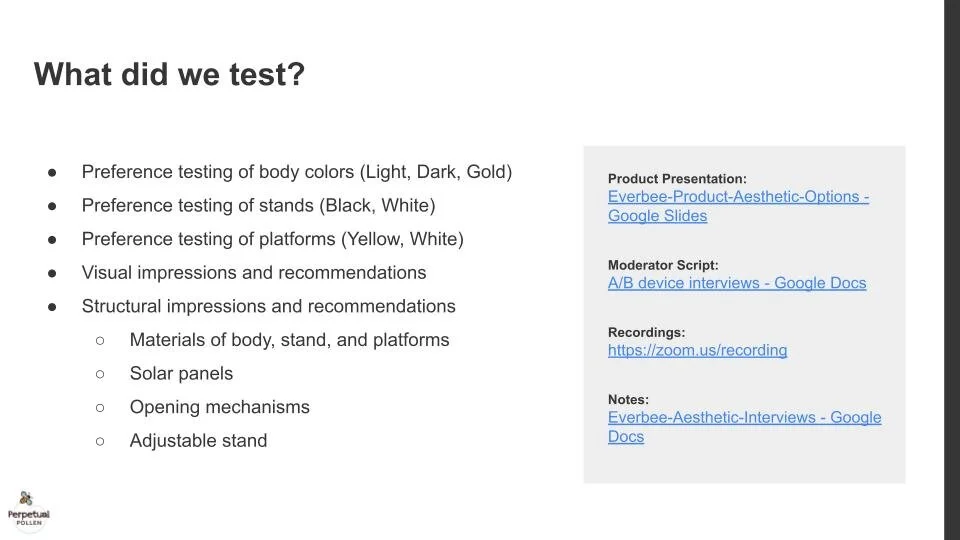
Body colors (Light, Dark, Gold)
Stand colors (Black, White)
Platform colors (Yellow, White)
Logo colors, size, and placement
Removal of platforms
Structural impressions and recommendations for:
Materials of body, stand, and platforms
Solar panels
Opening mechanisms
Adjustable stand
Additional impressions and recommendations
A/B Testing Strategy
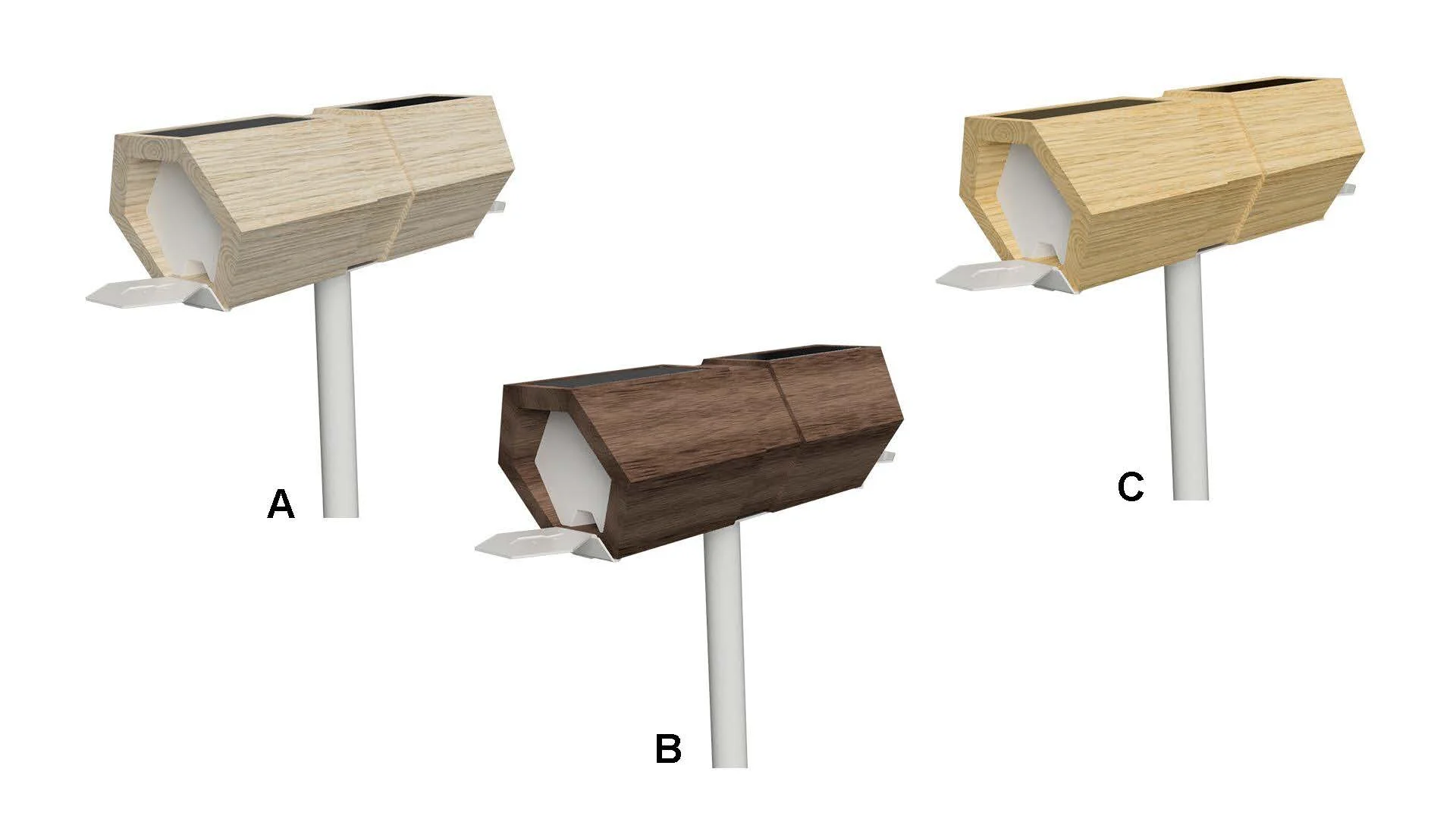
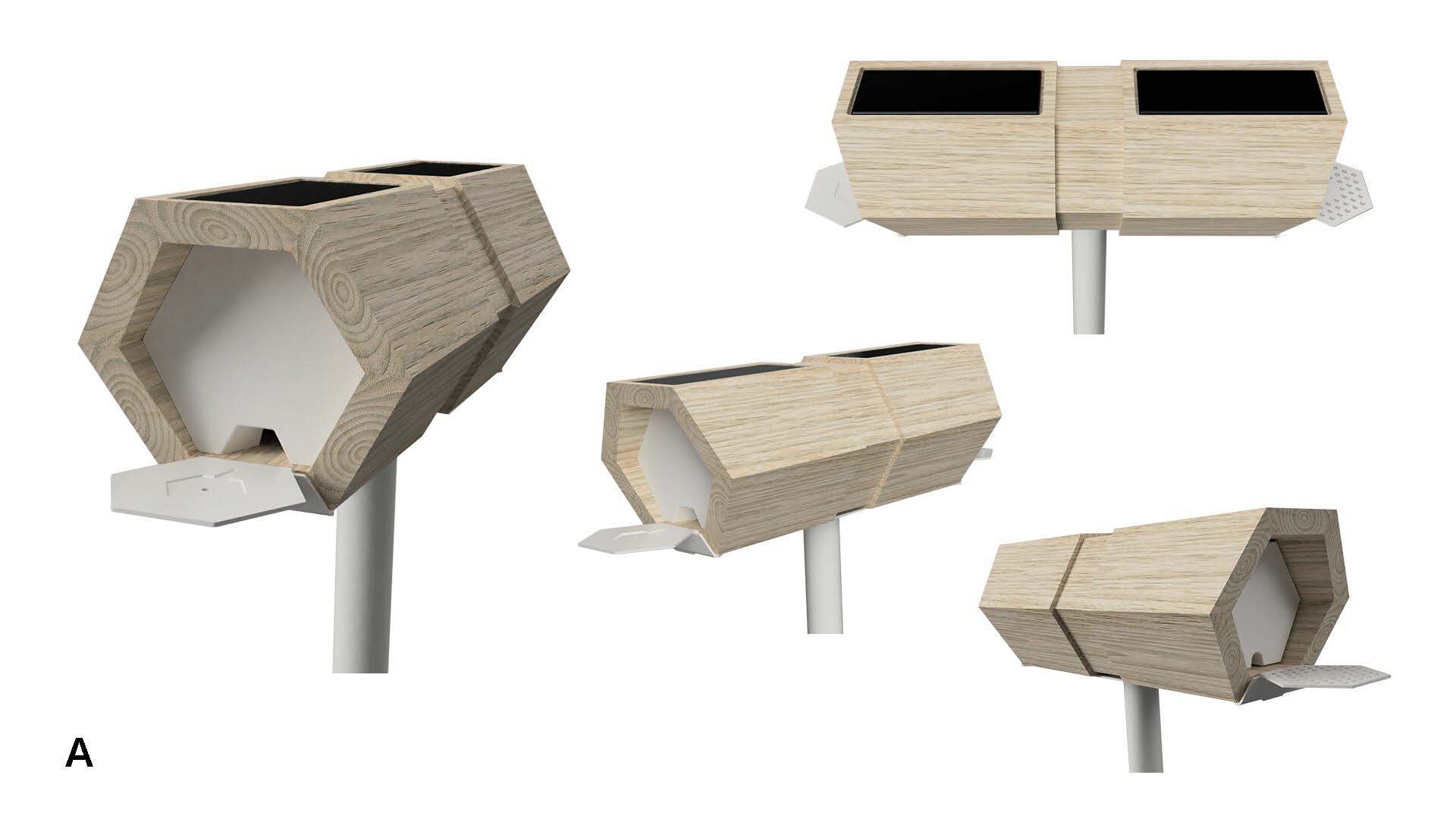
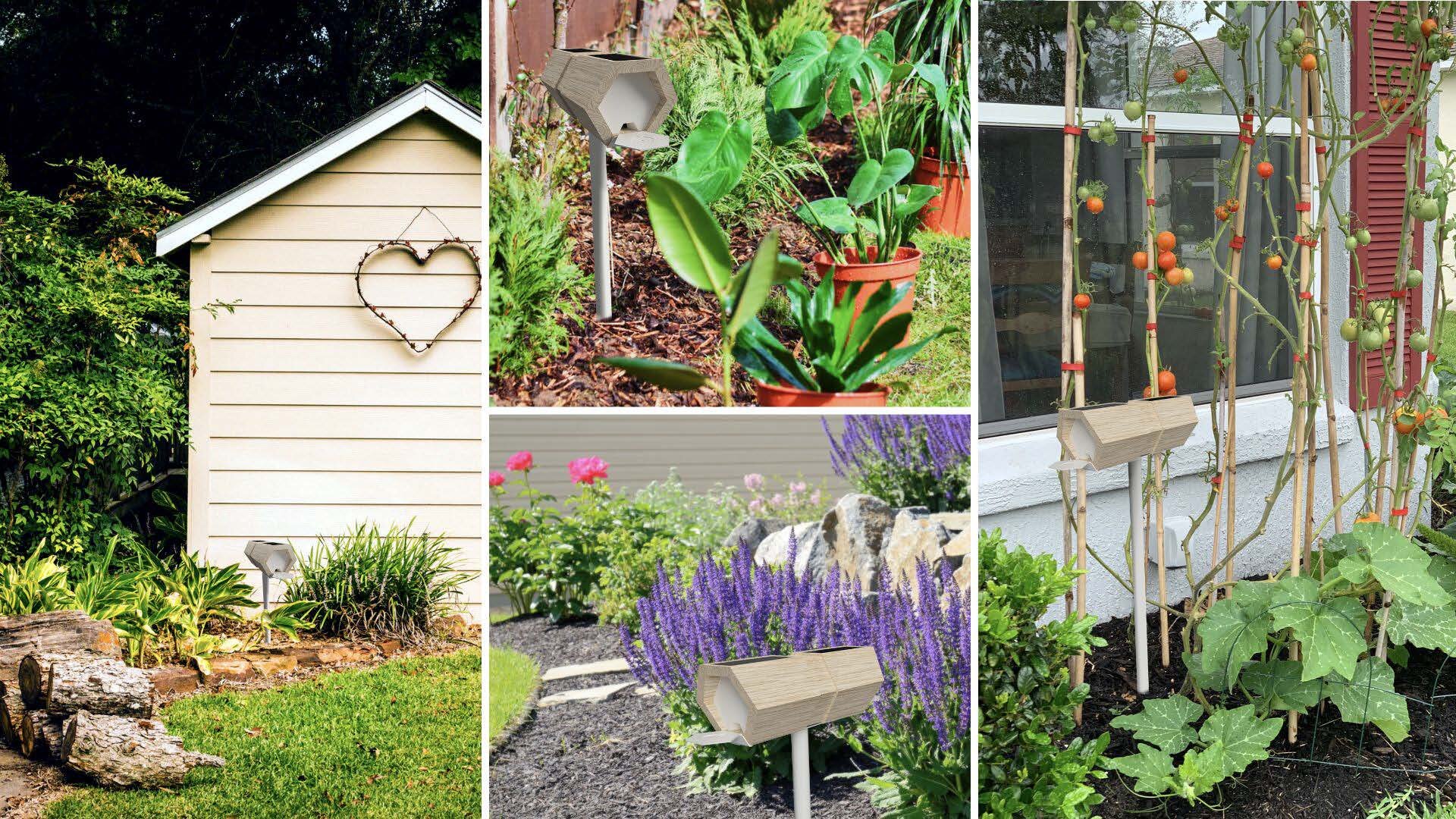
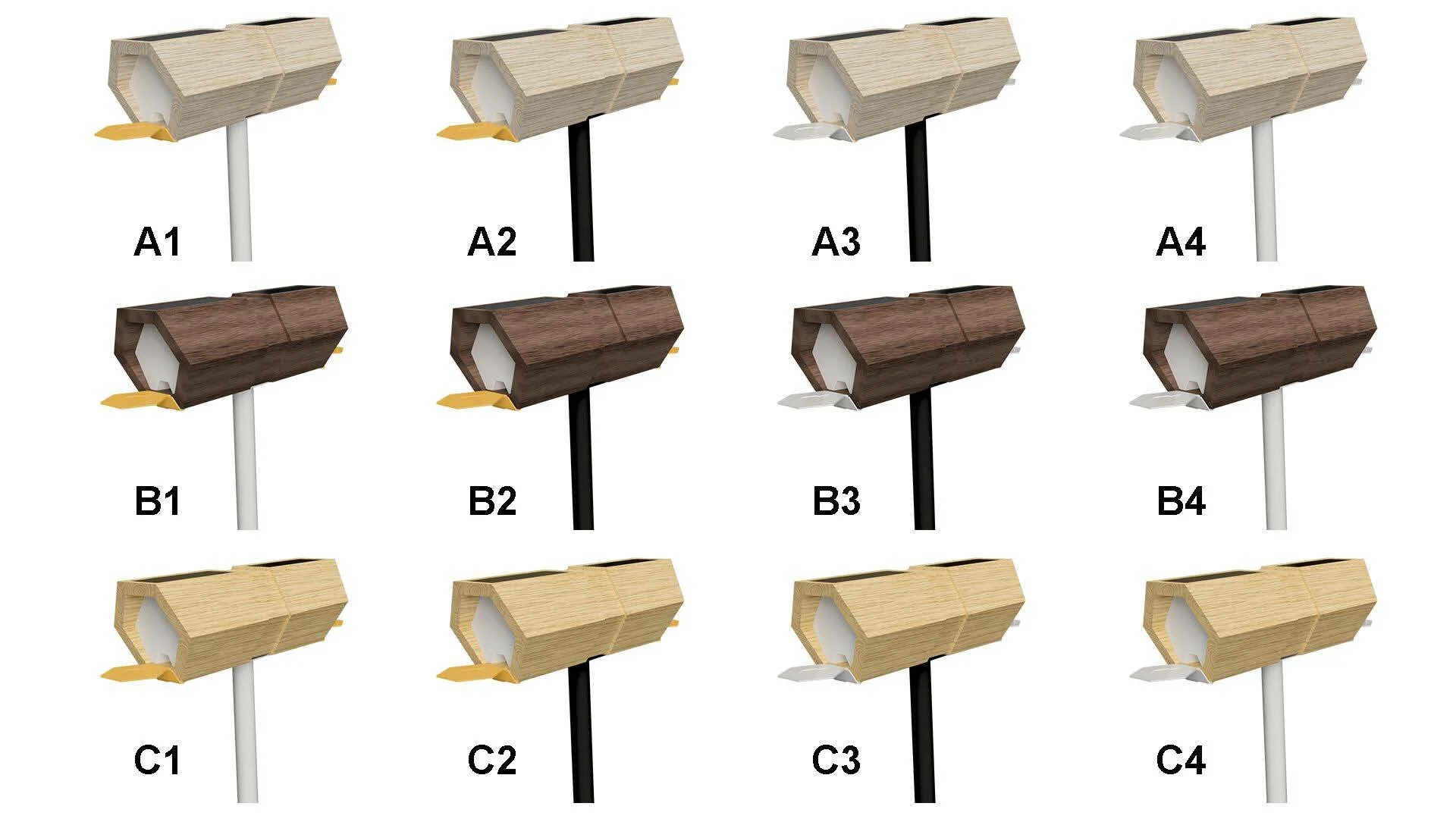
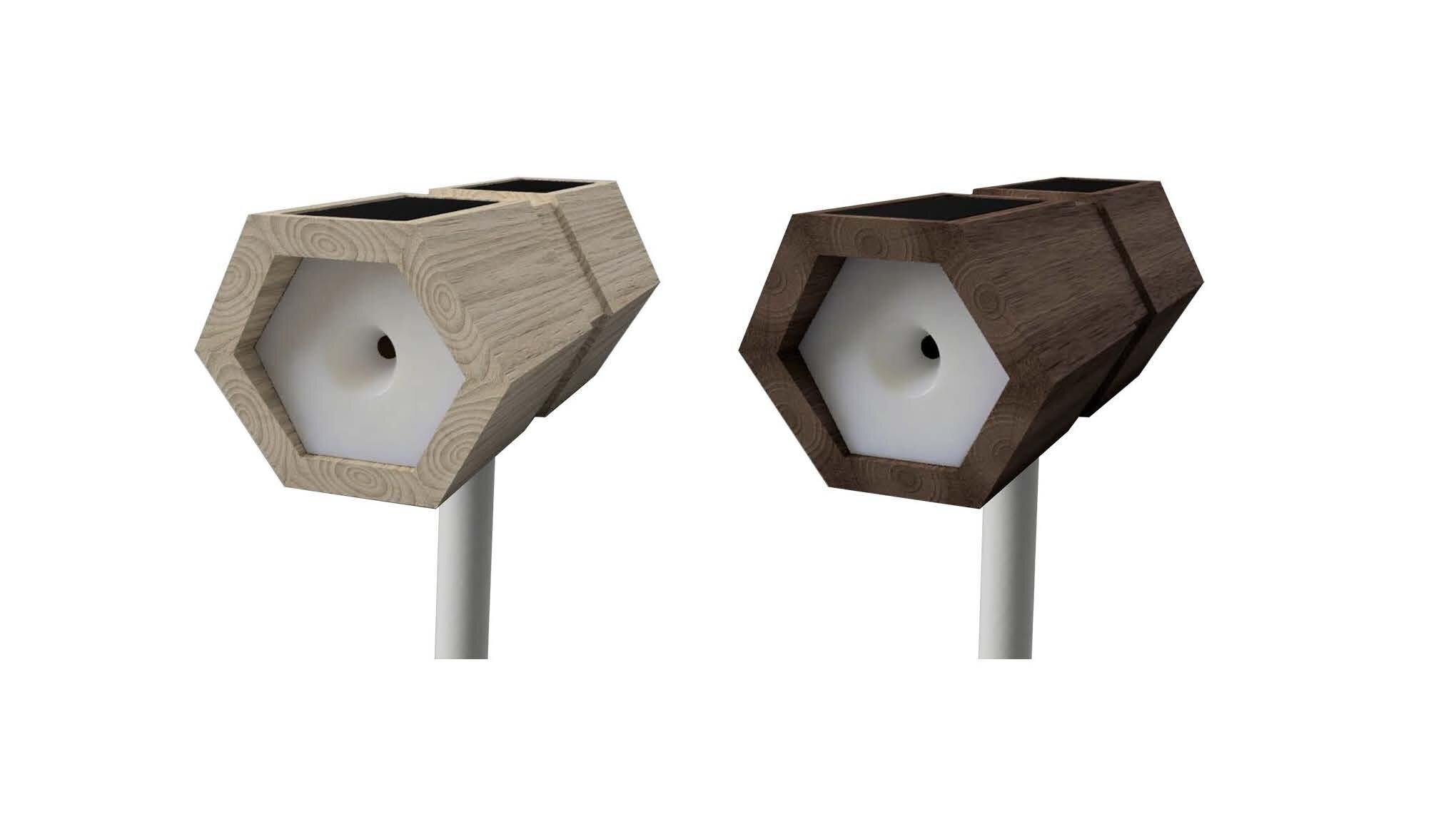
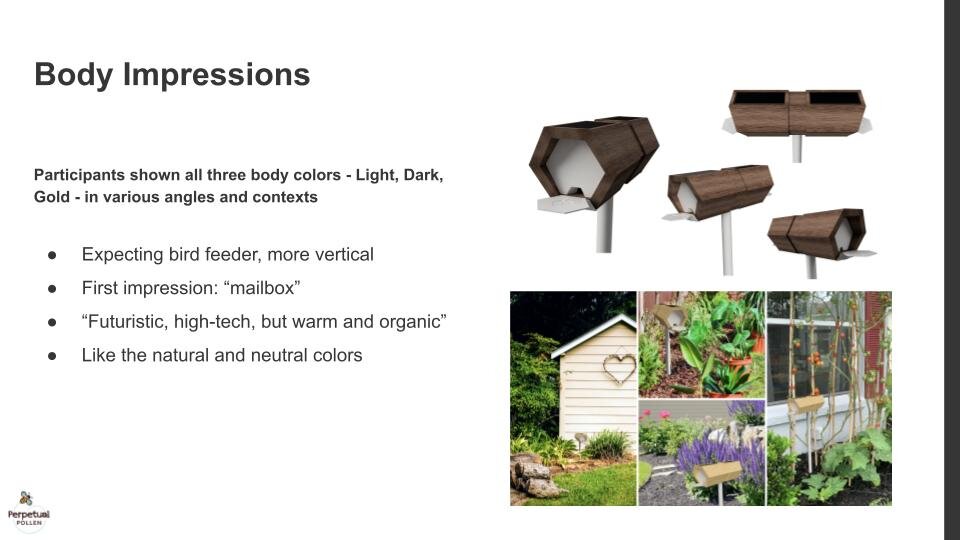
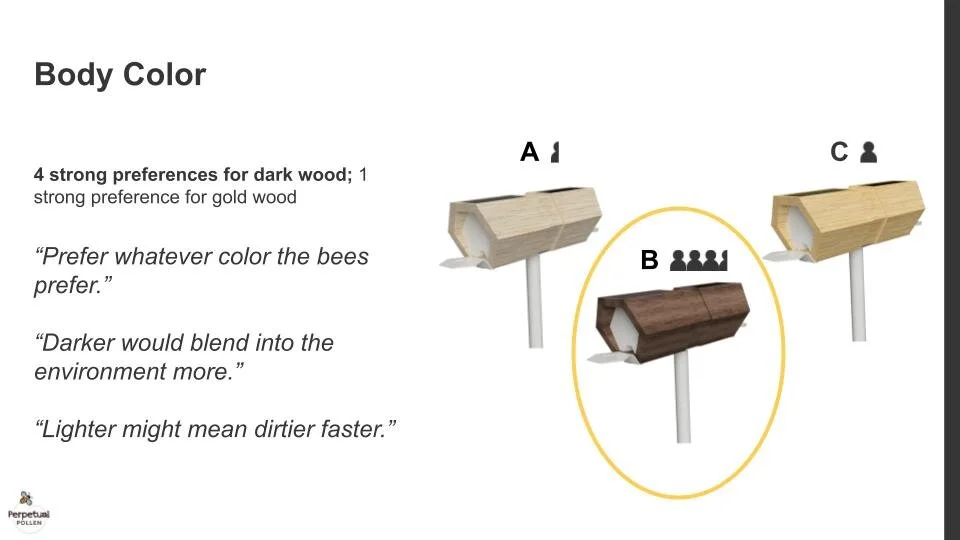
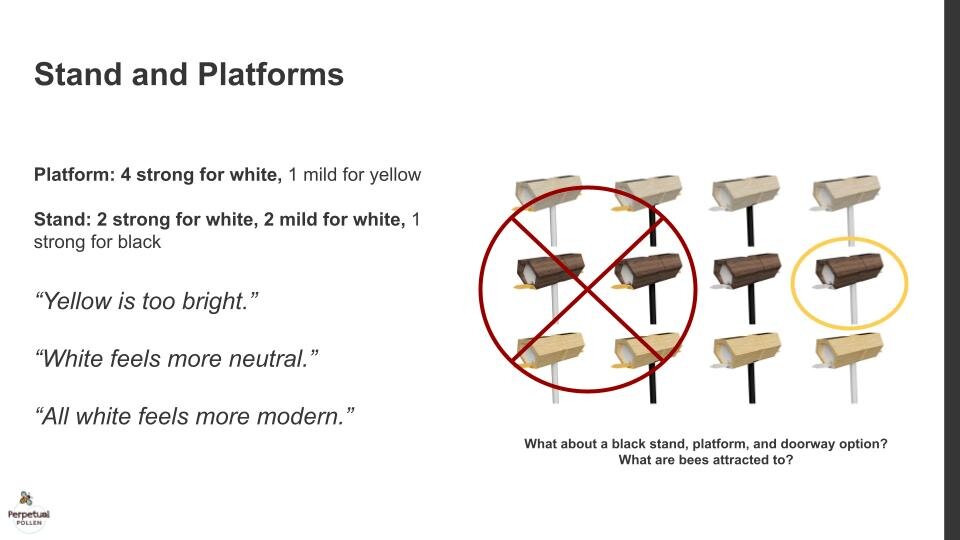
The device’s primary and accent colors were the designer’s chief concerns so I dedicated a large section of the interviews to both. We first presented a side-by-side visual comparison of each body color with natural (white) accents. Different angels and environmental contexts were provided as well. We explored impressions and unbiased suggestions with participants before introducing more detail. Participants were then shown a catalog of the body colors with every accent variation (12 total) allowing us to benchmark the designs while brainstorming with participants on aesthetic options. The interview then addressed the more conceptual topics of materials, structure, and price-point.
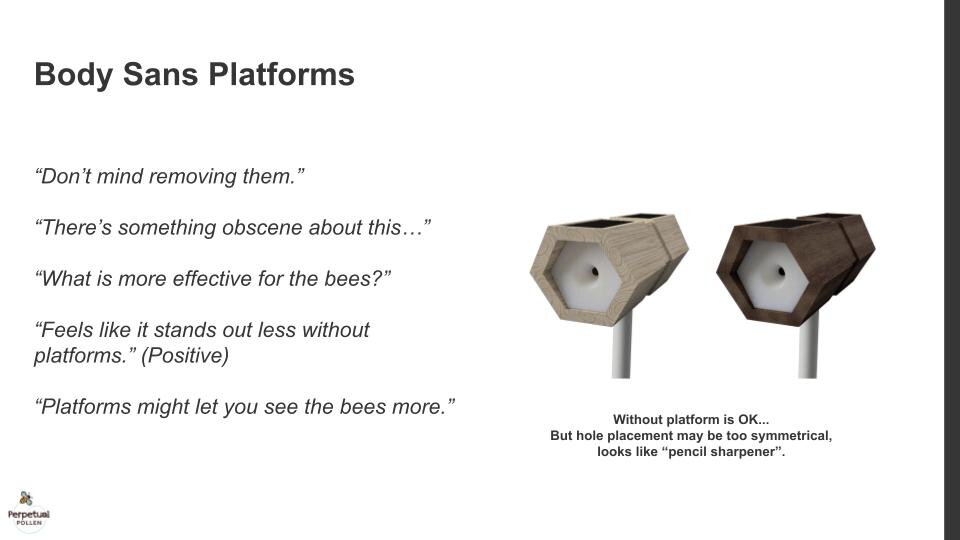
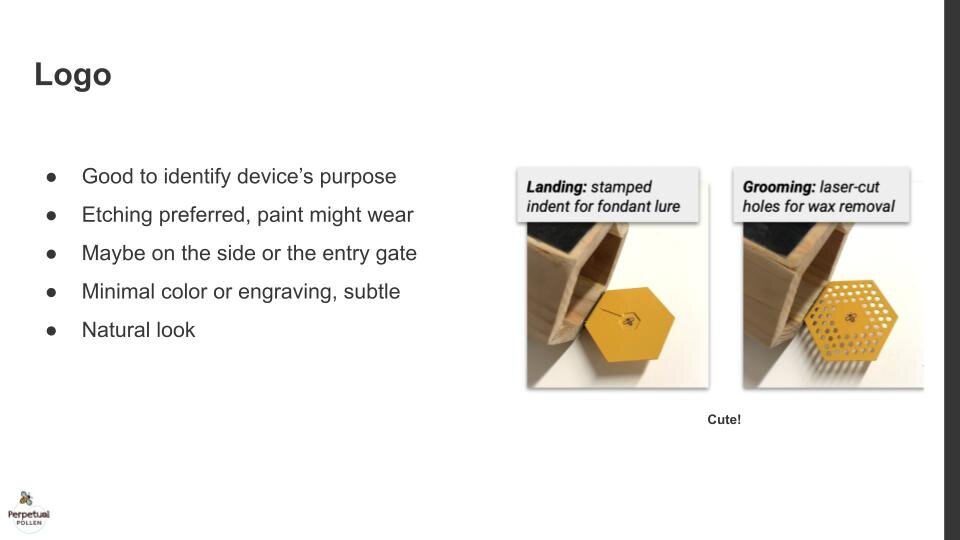
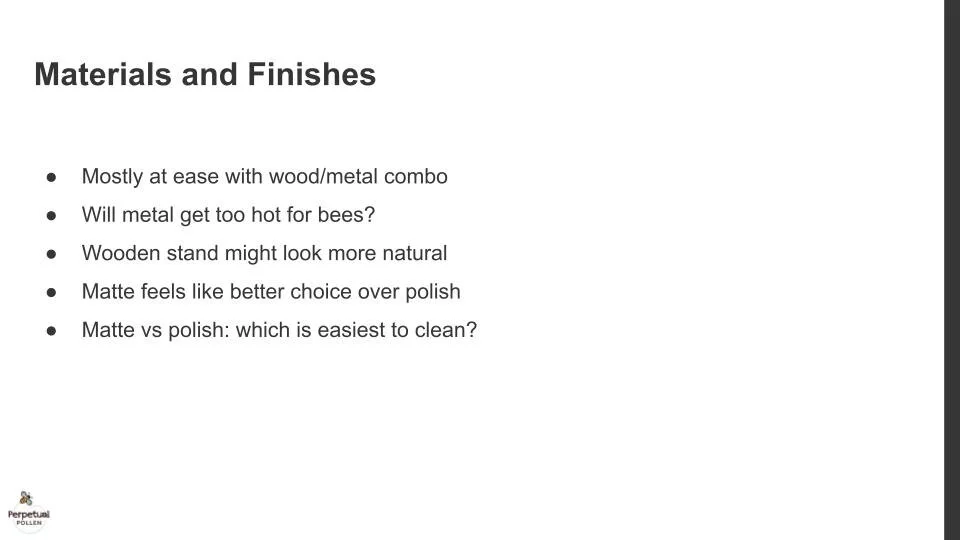
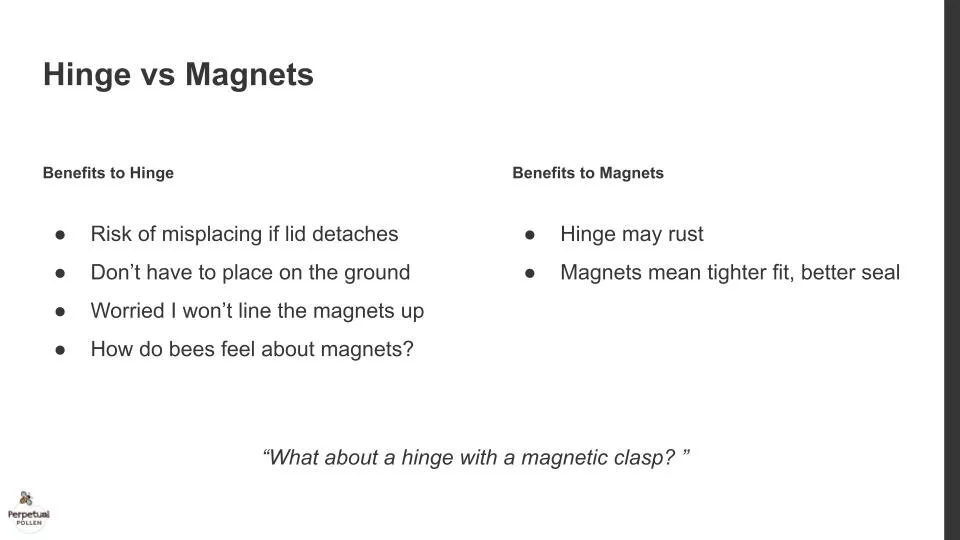
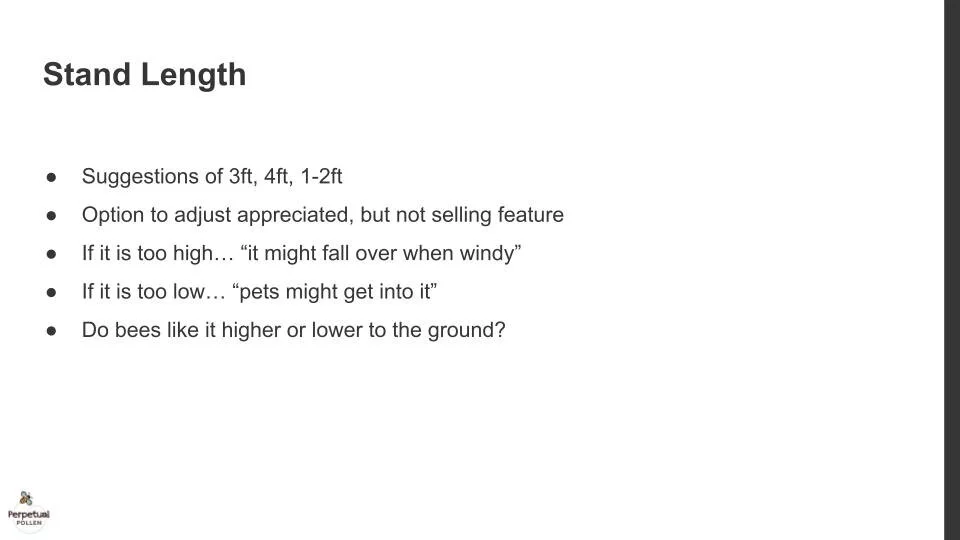
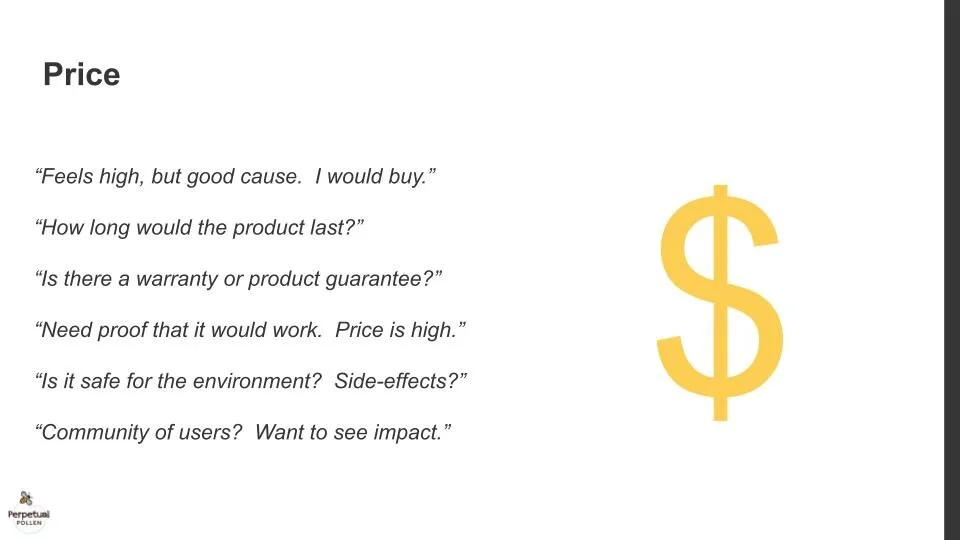
Below are a few examples of taken from the interview presentations.
Results and Debriefing
In summary, we found that the majority of our participants preferred a natural, subtle look. The darker wood was favored to the lighter counter-parts and participants generally disliked the bright yellow platforms. We were able to gauge many other factors on the product aesthetic and functionality outlined in the presentation below.
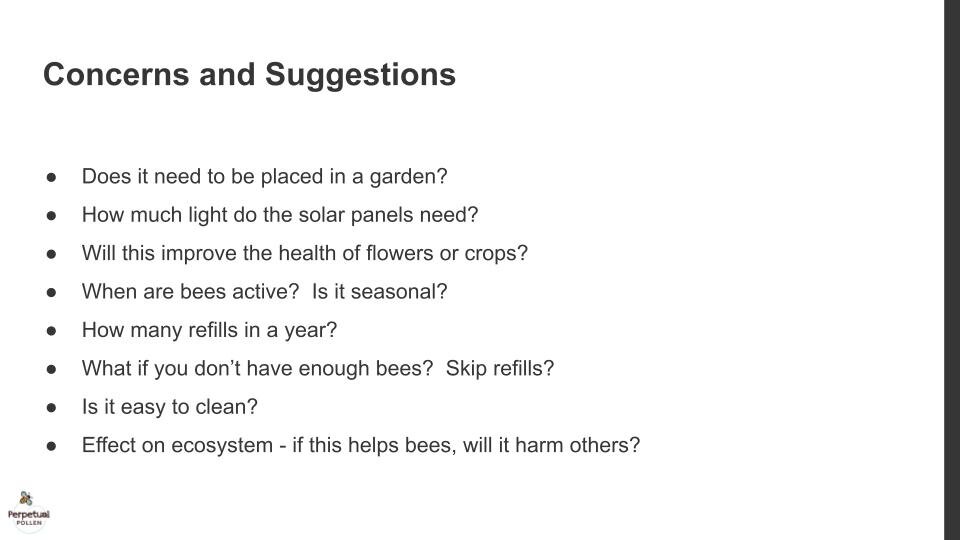
A profound surprise to us was the concern participants had towards the bee’s preferences. Whether talking about the size, color, or components of the device participants frequently asked, “What do bees like?” Participants expected the product would take these considerations at every level of detail, and it was a huge opportunity for us to design and market the device accordingly.
Check Back Soon
We are still in the process of researching and refining. More details to follow soon!